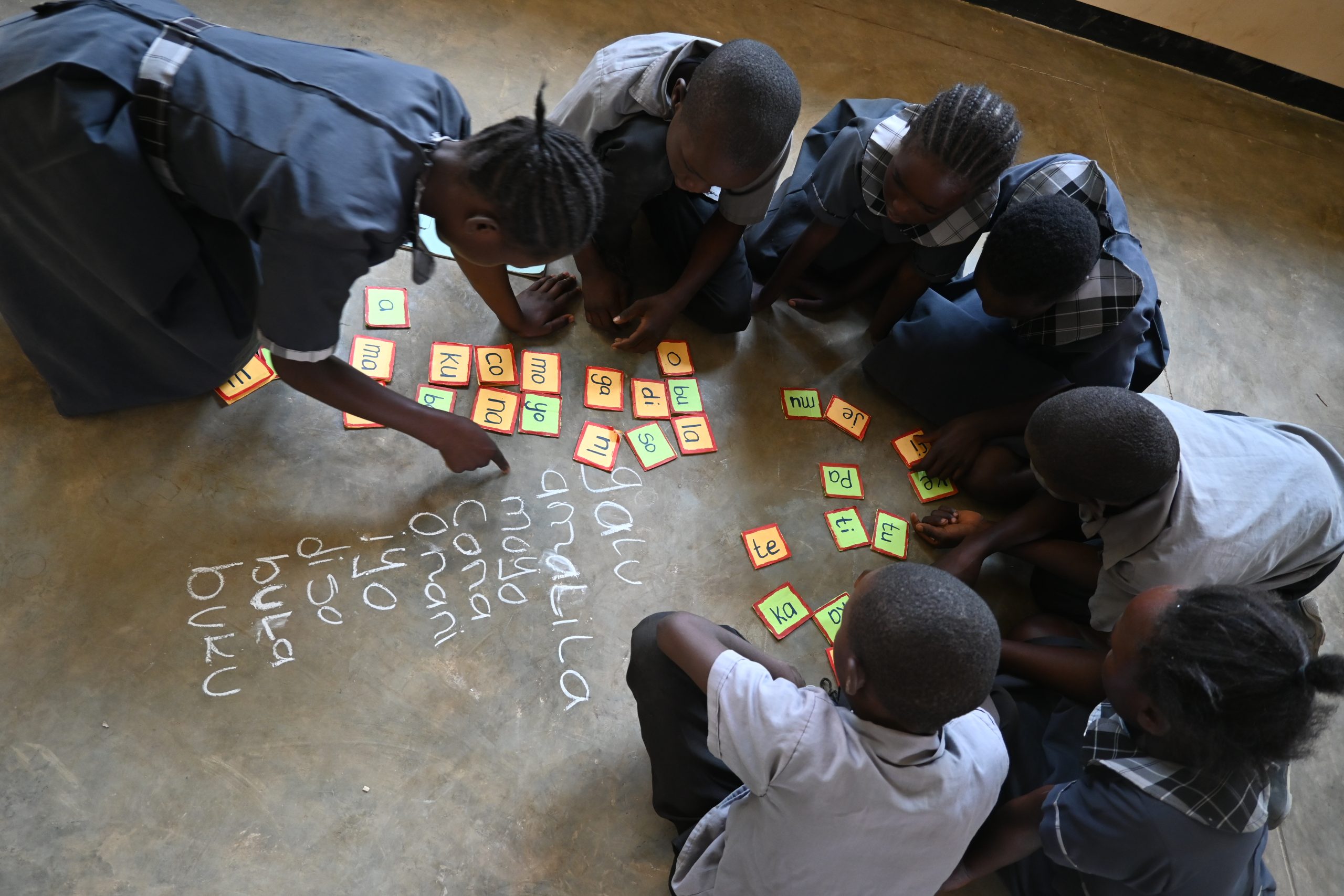
Across Côte d’Ivoire, every school morning begins with the same silent promise. Children take their seats at their desks, teachers prepare their lessons, and parents hope that today will bring their children closer to a more secure future. Foundational learning, particularly reading and mathematics, lies at the heart of this collective hope. Yet, as in many contexts, ensuring that all children acquire these basic skills remains a complex challenge. Despite high enrolment rates, learning outcomes vary widely, and many children struggle to build strong foundations in the early years.
In recent years, Côte d’Ivoire has undertaken structured efforts to strengthen foundational learning. A pilot project implemented in Méagui and Oupoyo now offers concrete insights into how communities can become full actors in children’s educational success.
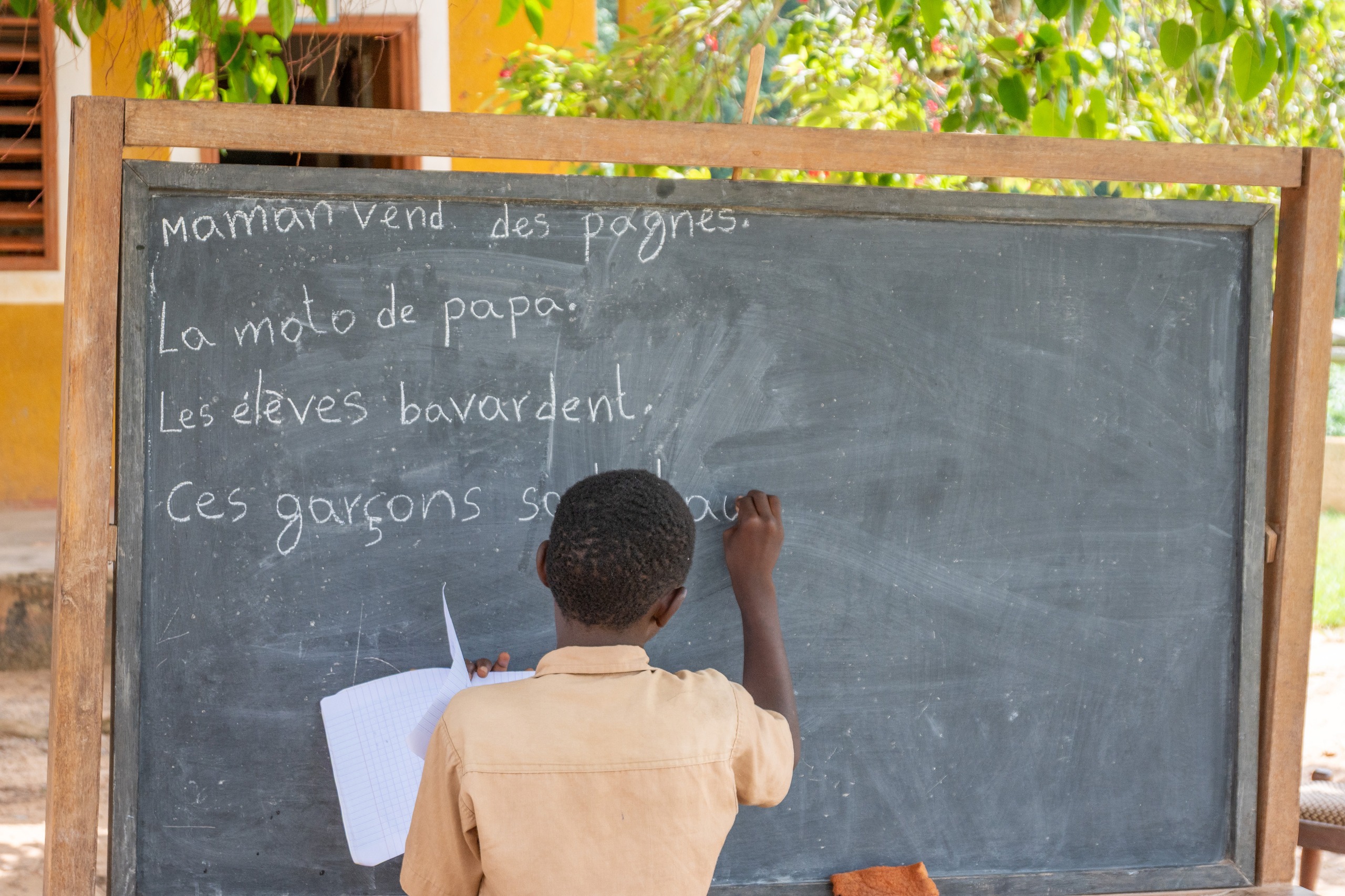
In many schools, classrooms are full, but learning levels remain uneven. Children progress at different paces, and instruction alone is not always sufficient to meet the diversity of their needs.
Outside the classroom, the absence of structured learning spaces within communities can exacerbate these challenges. School holidays and out-of-school time often lead to significant learning loss, reducing the progress made during the school year. These realities have highlighted the importance of strengthening the link between school and community so that foundational learning does not stop at the classroom door.
Anchoring community action in classroom reality
Before the launch of the project, classroom observations were conducted in participating schools with the support of the Preschool and Primary Education Inspectorates (IEPP). These observations helped establish a more nuanced understanding of existing teaching practices and learning dynamics.
They also made it possible to identify strengths in instruction as well as areas requiring additional support. Teachers subsequently received structured feedback, highlighting both observed successes and areas for improvement. This preparatory phase ensured that community-based support would align with what actually happens in the classroom, in order to strengthen, rather than disperse, daily pedagogical efforts.
Strengthening local school governance through COGES
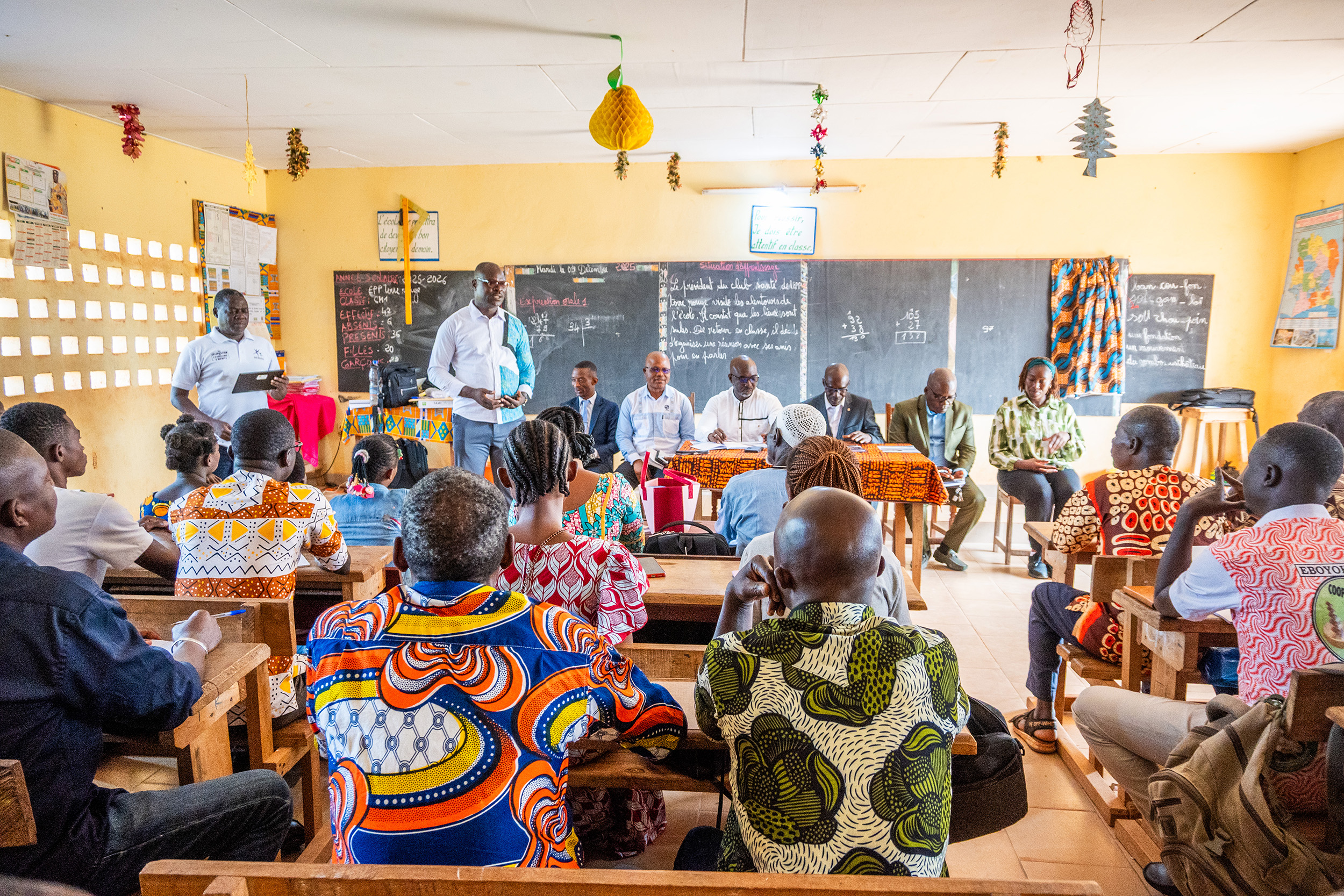
At the community level, School Management Committees (COGES) play a central role in school governance within Côte d’Ivoire’s education system. These structures contribute to the management and monitoring of school life and serve as an essential link between schools and communities.
In Méagui and Oupoyo, COGES were renewed through democratic elections organised in ten schools. The process mobilised a wide range of community actors, including village chiefs, religious leaders, women’s associations, youth groups, and parents.
Participation increased significantly compared to previous electoral cycles. At the Gnititouagui school complex, participation rose from 51 people in 2022 to 114 in 2024. In Gbletia, participation increased from 120 to 179. In Oupoyo, nearly half of participants were women, an encouraging signal in contexts where women play a decisive role in children’s well-being and educational success. As one school leader noted, communities mobilised because they felt that their voices truly mattered. This sense of being heard often marks the starting point of sustained collective action.
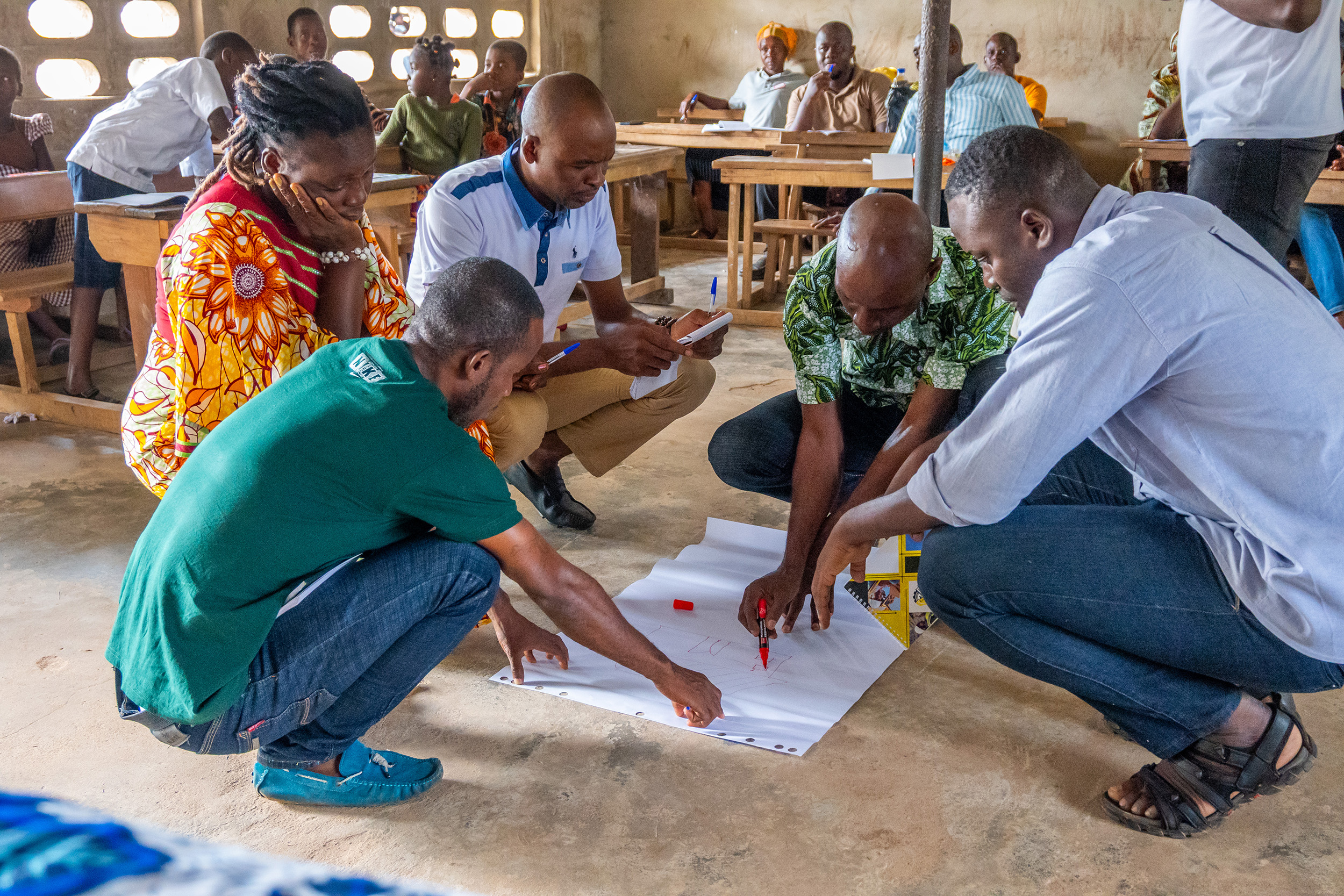
With the establishment of the new committees, COGES members began a structured training process. This training focused on identifying challenges faced by schools, mobilising communities around shared solutions, and developing Community Action Plans (PACC) aligned with the objectives of the National Programme for the Improvement of Foundational Learning (PNAPAS).
End-of-training assessments showed encouraging levels of understanding. Average scores reached 70 percent in Méagui and 64 percent in Oupoyo, reflecting a gradual appropriation of roles and responsibilities by committee members.
Several participants described this process using familiar language. Managing a school, they explained, is similar to managing a household. Before deciding what needs to be repaired, it is necessary to walk through each room, examine the walls, check the roof, and listen to the concerns of those who live there. From this shared understanding, a coherent plan can be developed, discussed, adopted, and implemented.
Extending learning beyond school hours: neighbourhood groups
It was within this framework that neighbourhood groups were introduced as a concrete extension of community engagement in support of learning. These groups bring together children who live close to one another and interact regularly outside school.
Each group includes between five and ten children at different learning levels, who may attend different classes or schools. Meetings take place in a safe and accessible space, selected with parental support and validated by the COGES. Each group has a group leader, and children rotate roles to develop a sense of responsibility and self-confidence.
Groups are formed in public schools, but children from private or faith-based schools may also participate. In communities with several public schools, children from schools not directly involved in the project can also join neighbourhood groups.
Volunteers at the heart of implementation
The monitoring of neighbourhood groups is carried out by volunteers drawn from parents or trusted members of the community. These volunteers are not paid. Their role is to ensure that children meet regularly in a safe environment and to facilitate playful learning activities in reading and mathematics.
They encourage children to look for answers on their own, sometimes with support from their peers, and participate in monthly follow-up meetings organised with the COGES. Volunteer selection is approved by both parents and COGES members, anchoring responsibility in a collective agreement.
Meeting locations are chosen carefully to ensure children’s safety. They are close to homes, away from sources of danger, and sufficiently visible and well lit, particularly when sessions take place after school hours.
What a neighbourhood group session looks like
Each session follows a clear and easy-to-reproduce structure. Children begin by sharing about their school day and recalling group rules, then make a collective commitment to work well, often reinforced by an energiser or a song.
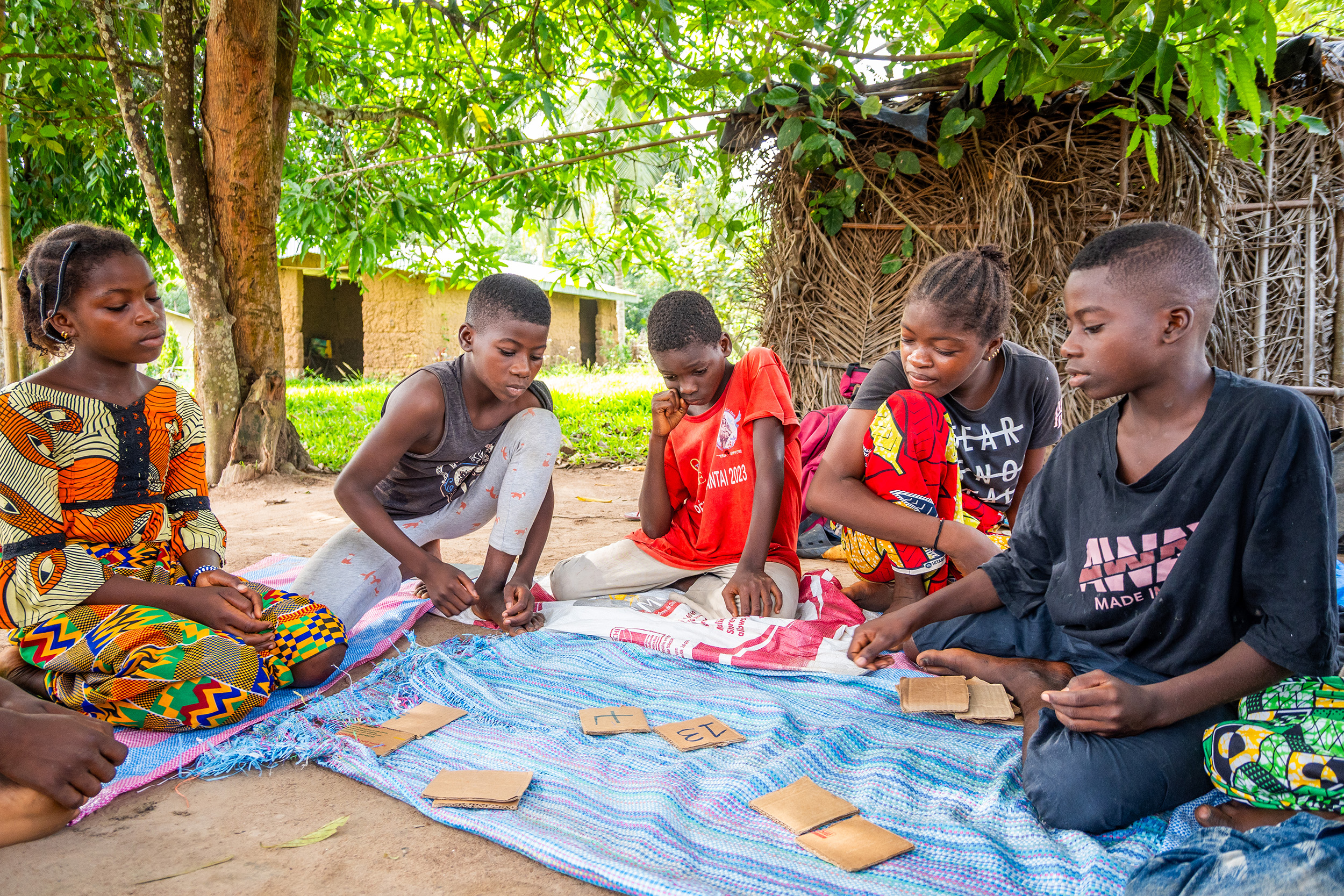
Reading and mathematics activities follow, lasting between 45 minutes and one hour. These activities rely on educational games such as sequencing, word cards, circle counting, or number comparison and manipulation games. The session ends with a closing activity and planning for the next meeting.
Children help volunteers complete activity monitoring forms. In many groups, the balance between structure and enjoyment was visible from the first weeks. Mathematics games such as My Number in My Head, Circle Counting, and The Multiplication Crack generated particular enthusiasm, sometimes extending sessions beyond the planned time. In Koréagui, one student demonstrated multiplication strategies with great confidence, illustrating the link between enjoyment of learning and self-confidence.
Encouraging early results
Over time, this approach began to produce measurable improvements in learning. In total, 30 COGES members and 90 volunteers were trained, leading to the creation of 164 neighbourhood groups. Monitoring visits revealed a high level of engagement, with most groups meeting more than twice a week and a volunteer present on a regular basis.
Governance and monitoring structures supported this engagement. Supervisors drawn from the COGES oversaw several neighbourhood groups, ensuring activities ran smoothly, children’s safety was maintained, volunteers were supported, and monitoring data were collected. Information flowed in a structured manner, from volunteers to COGES members, then through the CES-COGES, before being consolidated in collaboration with relevant institutions.
Midline and endline evaluations conducted during the 2023–2024 and 2024–2025 school years showed notable gains in reading and mathematics. In Oupoyo, higher-level reading skills, including paragraph reading and text comprehension, improved by 14 to 18 percentage points. Mathematics results increased by 19 to 25 percentage points depending on the domain assessed.
In Méagui, reading gains ranged from 8 to 10 percentage points, while numeracy gains ranged from 5 to 18 points. Without attributing these improvements to a single factor, the results suggest that additional structured learning time, combined with strengthened school governance, can significantly support foundational learning.
The pilot also highlighted areas requiring further strengthening. Some COGES members expressed the need for a clearer understanding of the scope of their responsibilities. Weather conditions, particularly heavy rainfall, sometimes disrupted outdoor sessions. In some schools, neighbourhood groups started later than planned, reducing the effective duration of activities.
These challenges led to concrete adjustments, including the development of activity guides, the organisation of refresher sessions, and strengthened support for COGES in order to sustain the initiative and maintain regular meetings despite field constraints.
Anchoring the work within an institutional framework
The dynamics observed on the ground are part of a broader institutional effort. The initiative, known as the School-Based Management Committee (SBMC) project, is led by the Ministry of National Education and Literacy (MENA), with support from TaRL Africa and the Japan International Cooperation Agency (JICA). Institutional coordination is provided by the Directorate for the Promotion and Monitoring of School Management Committees (DAPS-COGES).
The project is grounded in a principle widely documented by research, namely that active community engagement plays a decisive role in improving learning outcomes. However, consultations revealed that many parents continue to perceive education as the sole responsibility of schools, which limits their involvement in supporting learning.
To respond to this reality, the project aligns with PNAPAS and combines two complementary approaches, the École Pour Tous programme led by JICA, which focuses on community mobilisation around schools, and the neighbourhood groups initiative developed by TaRL Africa, which extends learning beyond the classroom.
Learning as a shared responsibility
Beyond the numbers, the experience highlights a deeper transformation. When schools, communities, and institutional structures move forward together, learning becomes a shared responsibility. Teachers continue their work in classrooms, parents, and volunteers extend learning within the community, and children grow up in environments where learning is present throughout daily life.
In Oupoyo, at the end of a neighbourhood group session, children were invited to share their aspirations. Responses came quickly, doctor, teacher, trader, mechanic. One young girl then added, more quietly, that she wanted to help children with disabilities learn, just as she herself had been supported.
As Côte d’Ivoire continues to advance its national education priorities, lessons drawn from COGES offer concrete pathways for strengthening school–community partnerships. They show that communities mobilised around clear roles and functional structures can become essential allies of schools. They reaffirm the close link between governance and pedagogy and demonstrate how strategic, evidence-based investment can generate tangible results.
The work continues, and new lessons will emerge over time. However, the early experiences in Méagui and Oupoyo already point toward a future in which every child has the time, support, and encouragement needed to master foundational skills and envision a future rich with possibilities.