Kaduna State sits at the crossroads of Nigeria’s diverse cultural and religious landscape. It is one of the most historically significant states in Northern Nigeria, a region deeply rooted in Islamic traditions, scholarship, and Quranic learning in Quranic schools–locally known as Tsangaya schools. Many children in Tsangaya schools struggle with foundational reading and math skills, limiting their ability to thrive in a rapidly evolving world.

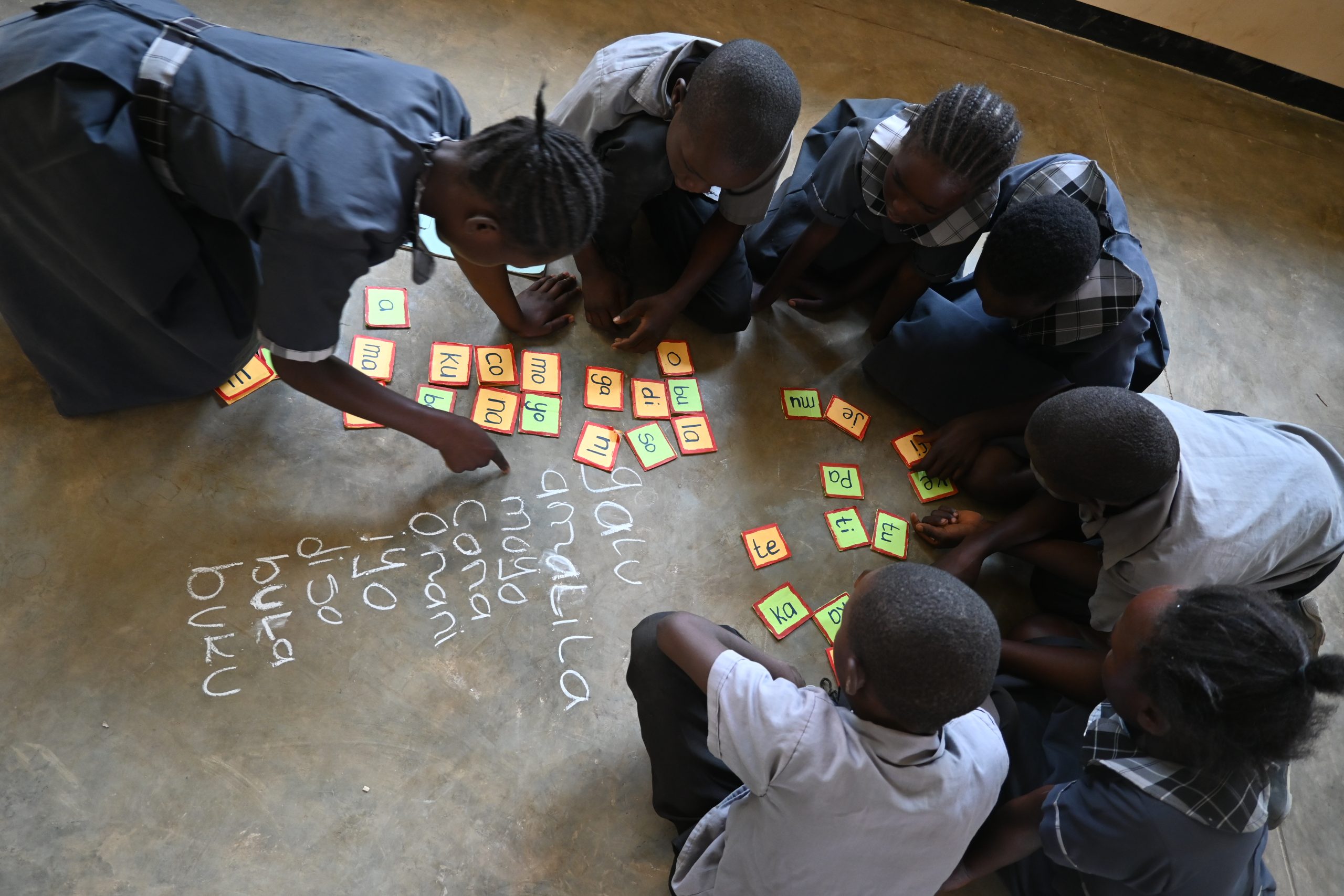
Group-based learning in Kaduna
This challenge is particularly evident among “almajirai”–young boys who are sent away by their families to study under Islamic scholars, often in distant cities. However, outside their Quranic classes, many almajirai like Ahmad find themselves on the streets, seeking alms for daily survival. The absence of conventional schooling leaves them struggling with even the most basic reading and math skills, widening the learning gap between them and their peers in formal schools.
Ahmad’s Story: A Familiar Struggle
Ahmad was sent from his home in Katsina State to Kaduna State, where he was placed under the care of his Islamic teacher to focus on learning the Quran. Every morning, he would recite verses, carefully committing them to memory, a skill revered in his community. Yet beyond his Quranic lessons, Ahmad faced a silent struggle: he could not read alphabets in English or Hausa, his native language. Numbers were a mystery to him. Like many almajirai, he experienced a gap, missing out on critical reading and math skills that could empower him to navigate the world around him.
Recognizing this educational imbalance for many children like Ahmad in Kaduna, the Federal Government of Nigeria established Integrated Qur’anic and Tsangaya Education (IQTE) schools across States in Northern Nigeria including Kaduna State. The IQTE schools are designed to merge Quranic studies with conventional education. This initiative seeks to provide almajirai with basic reading and math skills while allowing them to continue their religious education. However, ensuring effective learning within these schools required a structured approach tailored to the students unique needs. That’s where Teaching at the Right Level (TaRL) comes in.
Thanks to the support of the Aminu Musa Abdulsalam (AMA) Foundation, which funded the implementation of the TaRL methodology, hundreds of almajirai, including Ahmad, were given a second chance at learning. TaRL Africa, in collaboration with the Kaduna State Government and the AMA Foundation, co-created a specialized program that adapted TaRL techniques to suit IQTE schools. The intervention focused on providing structured, engaging, and interactive literacy and numeracy lessons that align with the learning pace of each child. 164 teachers have been trained in the approach, and 19 schools across the state are implementing the program, reaching approximately 2,600 children. To ensure sustained impact, five Master Trainers from the Kaduna State Universal Basic Education Board (SUBEB) provide ongoing mentoring and support to teachers, reinforcing best practices and problem-solving challenges on the ground.
Community Perspectives
For teachers like Mallam Sani, the approach has been nothing short of transformative. “The engagement levels in my classroom have increased tremendously. My students are more confident, especially in speaking publicly.” Despite limited resources, teachers have shown remarkable creativity in implementing TaRL techniques. Salome Joseph, a Master Trainer, was particularly inspired by their dedication. “The way teachers improvise materials to make the sessions engaging is incredible. They find ways to ensure every child is involved, no matter the constraints.”
For Aisha Mamman, the Executive Director of the AMA Foundation, supporting TaRL was an easy decision. “The method’s use of local languages before transitioning to English is critical for the almajirai. Many of these children struggle because they are not taught in a language they understand. TaRL meets them where they are and builds from there.”
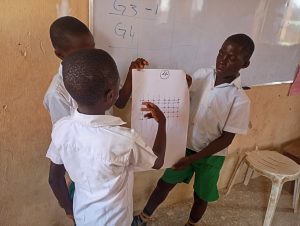
Children engaged in a multiplication activity
Children are also feeling the shift. Hansatu, one of the students benefiting from the approach, shared, “Before, I was too shy to speak in front of the class. Now, I can read simple words, and my favorite part of the lessons is the number wheel in numeracy sessions.” As for Ahmad, the change has been remarkable. By the midline assessment, he was not only able to recognize letters in the Hausa alphabet, but he had also begun attempting to read simple words–something challenging just months before. With continued practice and the support of his teachers, he remains optimistic about reading fluently. The integration of TaRL into IQTE schools in Kaduna is proving to be fruitful. By recognizing the importance of wholesome education, the initiative is creating opportunities for almajirai to develop foundational skills that will serve them well beyond the walls of their Quranic schools. It is a testament to the power of collaboration between governments, nonprofits, and local communities in transforming education. As this program continues to grow, the hope is that more states across Nigeria will adopt similar models, ensuring that no child is left behind–whether in religious or secular learning. After all, education should not be a choice between faith and knowledge. With the right approach, children like Ahmad can have both.
Teaching at the Right Level (TaRL) is an evidence-based approach that targets children in Grades 4 to 6, supporting them to acquire and consolidate foundational literacy and numeracy skills. For more information on the methodology, visit www.tarlafrica.org. In Nigeria, the programme is benefitting almost two million learners across 10 states. The state Universal Basic Education in these states leads the implementation with support from the Universal basic Education Board at the Federal Level. In Kaduna State, the programme is supported by the Kaduna State Government in collaboration with the Aminu Musa Abdulsalam (AMA) Foundation and TaRL Africa, who are working together to ensure that children, regardless of their educational background, gain the skills they need to thrive in life and learning.