Kaduna is one of those places that stays with you. The city is alive with sound: the steady hum of motorcycles weaving through traffic, the call of traders in the markets, and the chatter of children making their way to school in crisp uniforms. By the roadside, women sell roasted maize and groundnuts; the smell carries on the breeze. The Kaduna River cuts through the city, wide and calm, giving the town both its name and its sense of place. Life here moves quickly, yet there are moments of stillness: an old neem tree offering shade or children tracing letters in the dust with sticks.
It is in this setting that Government Junior Secondary School Kakuri (GJSS) Kakuri, a junior secondary school, stands. From the outside, it looks like any other school: concrete walls, sun-faded paint, and simple desks arranged in rows. But inside these classrooms something remarkable has taken place. A pilot of the Teaching at the Right Level (TaRL) methodology in secondary school settings was introduced here, in collaboration with UNICEF, the Kaduna State Universal Basic Education Board (SUBEB), the Teacher Service Board, the Quality Assurance Authority, and the Kaduna State Ministry of Education.
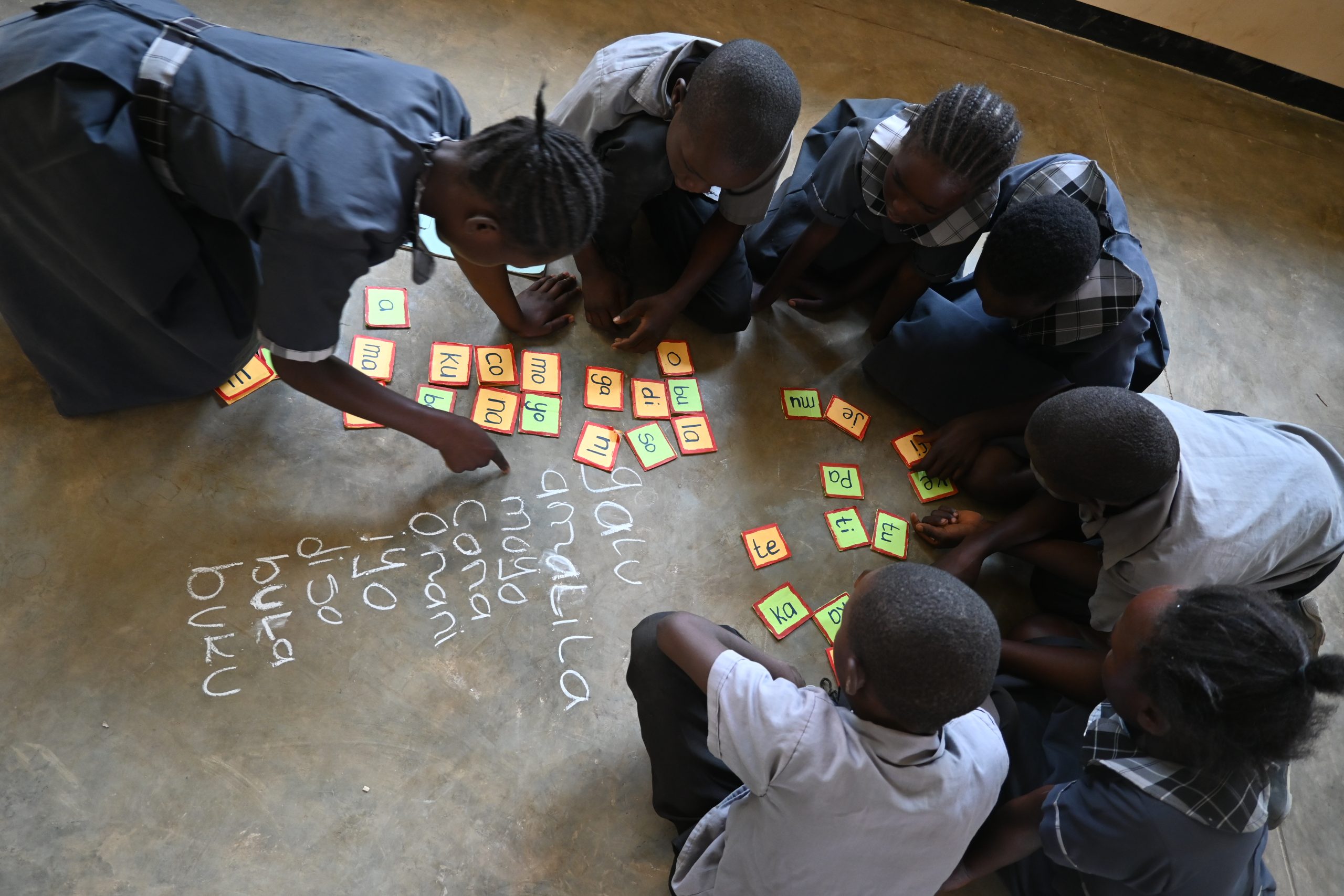
Teaching at the Right Level groups children not by age or grade, but by the actual skills they demonstrate in a simple one-on-one oral assessment, ensuring teaching meets them exactly where they are. After testing, children are placed into one of several learning levels that reflect their literacy and numeracy abilities. Those at the beginner level cannot yet identify letters or recognize basic numbers and require foundational exposure through simple, confidence-building activities.
The next group can recognize some letters and numbers but cannot form words or work comfortably with quantities; they focus on strengthening letter knowledge, phonemic awareness, counting, and number ordering. Children who can read simple words or identify larger numbers are grouped at the word level, where they begin to transition into short sentences and basic operations.
Those who can read connected sentences join the paragraph level, focusing on fluency, comprehension, and applying basic numeracy in practical tasks. The final group, the story level, includes children who can read full stories with understanding and handle operations more confidently; they are often ready to transition back into regular classes. This skill-based grouping addresses a systemic gap in many African classrooms by shifting teachers away from rigid curricula toward the targeted learning needs of each child, allowing children who were previously left behind to rebuild confidence, accelerate their progress, and master foundational reading and numeracy. Although the first phase of the pilot ran for just eight hours, far less than the projected 38 to 50 hours, the results have been striking. On average, 80% of learners are now performing at the paragraph level or above in literacy. It is proof that when children are supported based on their current knowledge, progress is not only possible, it can be swift.
Among the learners, one story stands out. Maryam, a Junior Secondary School Level 1 student, comes to school with an unusual companion: her mother, who enrolled herself in Junior Secondary School, Level 3. When she was young, Maryam’s mother never had the chance to advance her English. But she carried a determination that her daughter would not face the same limits. She enrolled Maryam in school and, at the same time, decided to continue her own learning. Their paths, though separated by age and circumstance, soon intertwined.
Maryam’s mother noticed her daughter’s rapid progress in English. She learned that it was through TaRL, but the program was being piloted only in Junior Secondary School, Level 1, not in her own class. She could have accepted this. Instead, she chose another way. Day after day, she would linger outside Maryam’s classroom, listening to the lessons.
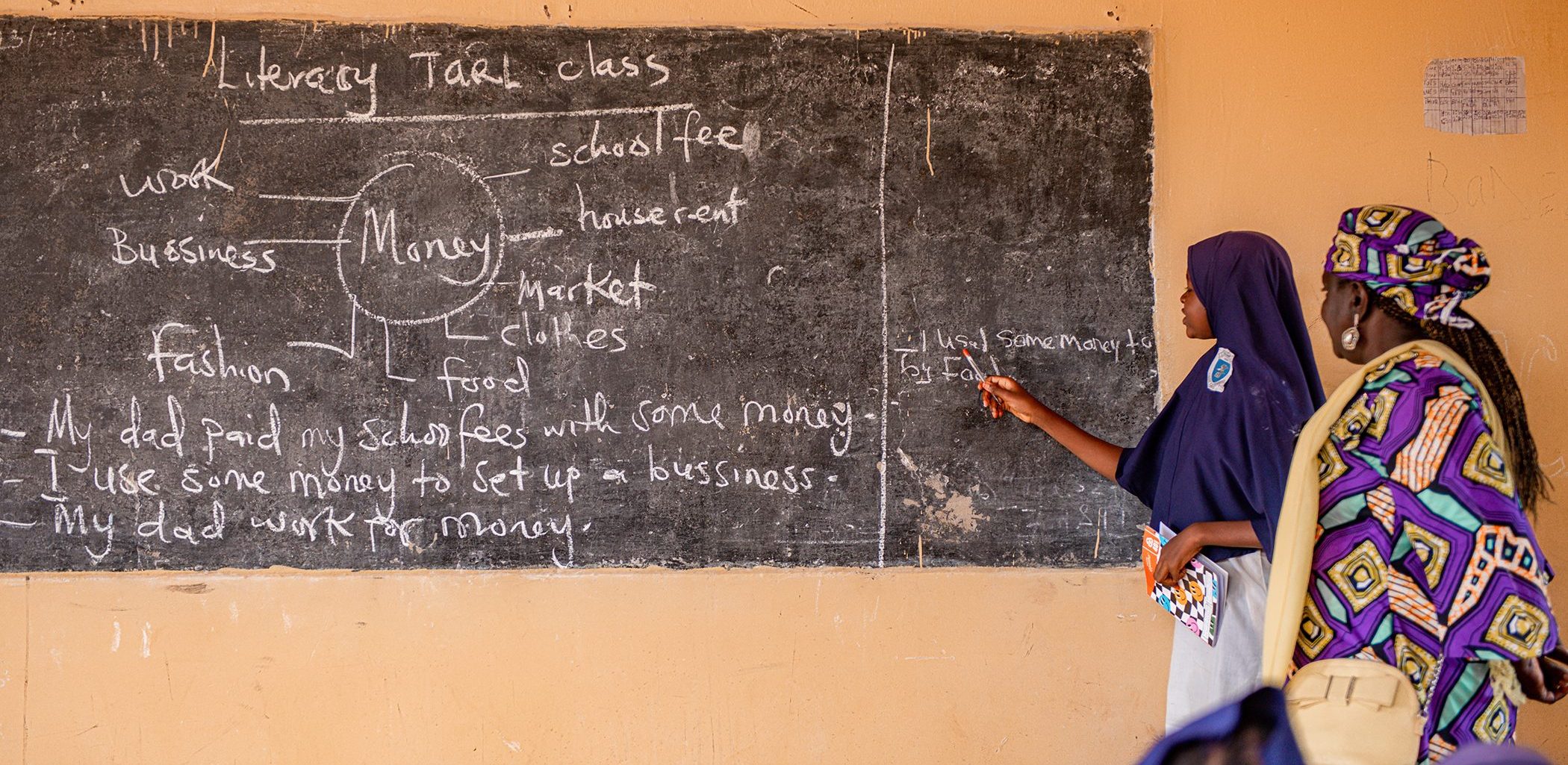
In the evenings, under the soft glow of a warm light at home, Maryam became her teacher. She patiently shared the day’s learning with her mother, repeating new words, practicing simple sentences, helping her find confidence in sounds once unfamiliar. The picture is powerful: a daughter teaching her mother, their voices mingling as they practice together. What was once a barrier slowly becomes a bridge. Now, both Maryam and her mother can communicate in English. They speak with pride, not perfectly, but clear and sure. Their achievement is more than personal. It is a testament to what happens when learning is made accessible, when communities and institutions come together to provide support, and when determination meets opportunity.
This is the heart of Teaching at the Right Level. It is not only about numbers on a chart but about lives changed. It is about dignity restored, potential unlocked, and the truth that learning has no age limit. In Kaduna, amid the dust of schoolyards and the sounds of a bustling city, Maryam and her mother remind us of something simple yet profound: with the right support, anyone can learn, and when they do, the whole community moves forward.
In Kaduna State, Teaching at the Right Level has taken root across 1,461 schools, reaching 221,964 learners who are steadily acquiring the foundational skills that shape long term learning. This advancement is anchored in the leadership of the Kaduna State Government, whose clear vision and consistent commitment to evidence based, child focused instructional practices have set the pace for progress. With the state at the helm, and with complementary support from partners including UNICEF and TaRL Africa, children across Kaduna are gaining the tools they need to thrive, learner by learner, classroom by classroom, community by community.