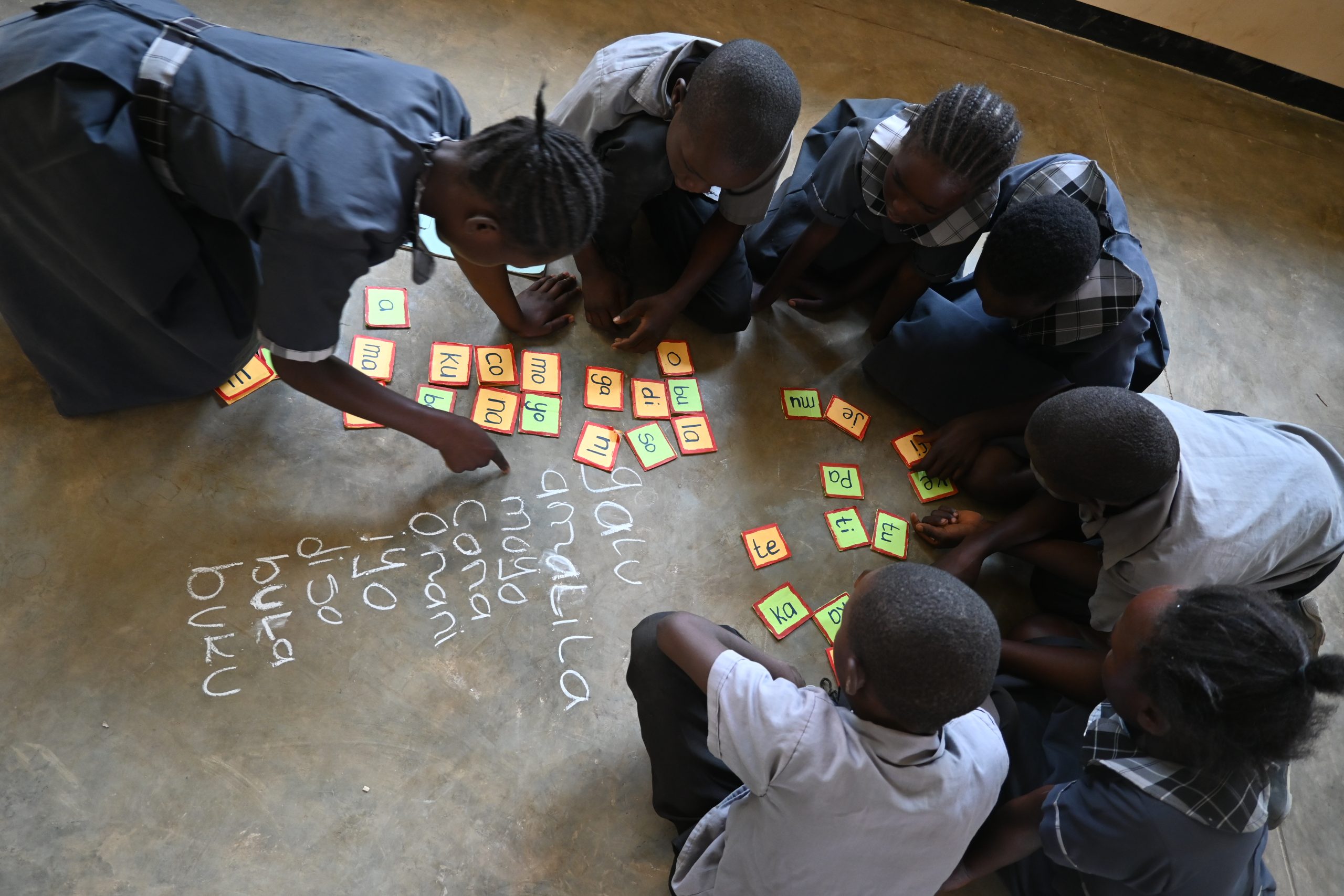
The story of foundational learning in Nigeria is, above all, a story of government leadership. Across the regions where Teaching at the Right Level is being implemented, state governments, via the State Universal Basic Education Board (SUBEB), have taken deliberate steps to strengthen teaching practices. They have also reorganized systems and prioritized the needs of children who have struggled for years with basic literacy and numeracy. What is unfolding across these states is not a project driven by external actors. It is a public effort led by Nigerian institutions, shaped by Nigerian priorities, and supported by partners who have been invited to contribute their technical expertise. In each state, government officials have taken charge of the direction, pace, and scale of programming. TaRL Africa’s role has been to accompany them with technical guidance, capacity support, and evidence. The leadership rests squarely within their hands. This dynamic has been the anchor of Nigeria’s progress and the primary reason that learning outcomes have strengthened across thousands of classrooms.
In states such as Kaduna and Kebbi, this leadership is visible in the depth of public financing and the strength of institutional structures. Kaduna State engaged with TaRL through a UNICEF-funded pilot that demonstrated strong learning gains. Building on that evidence, the state government took ownership of the program, expanded implementation to 6 additional local government areas (LGAs), added more than 700 schools, and reached approximately 82,000 more children. This expansion was financed through government-directed World Bank funding, signaling a clear intention to place foundational learning at the center of the state’s education priorities. Kaduna also created a foundational learning strategy known as KALINA, a strategy that sets out the state’s commitment to achieve system-wide scale in 3 years. Kebbi State followed a similar path by allocating state funding to expand to 4 new LGAs and by articulating a plan to reach all 21 LGAs in the future.
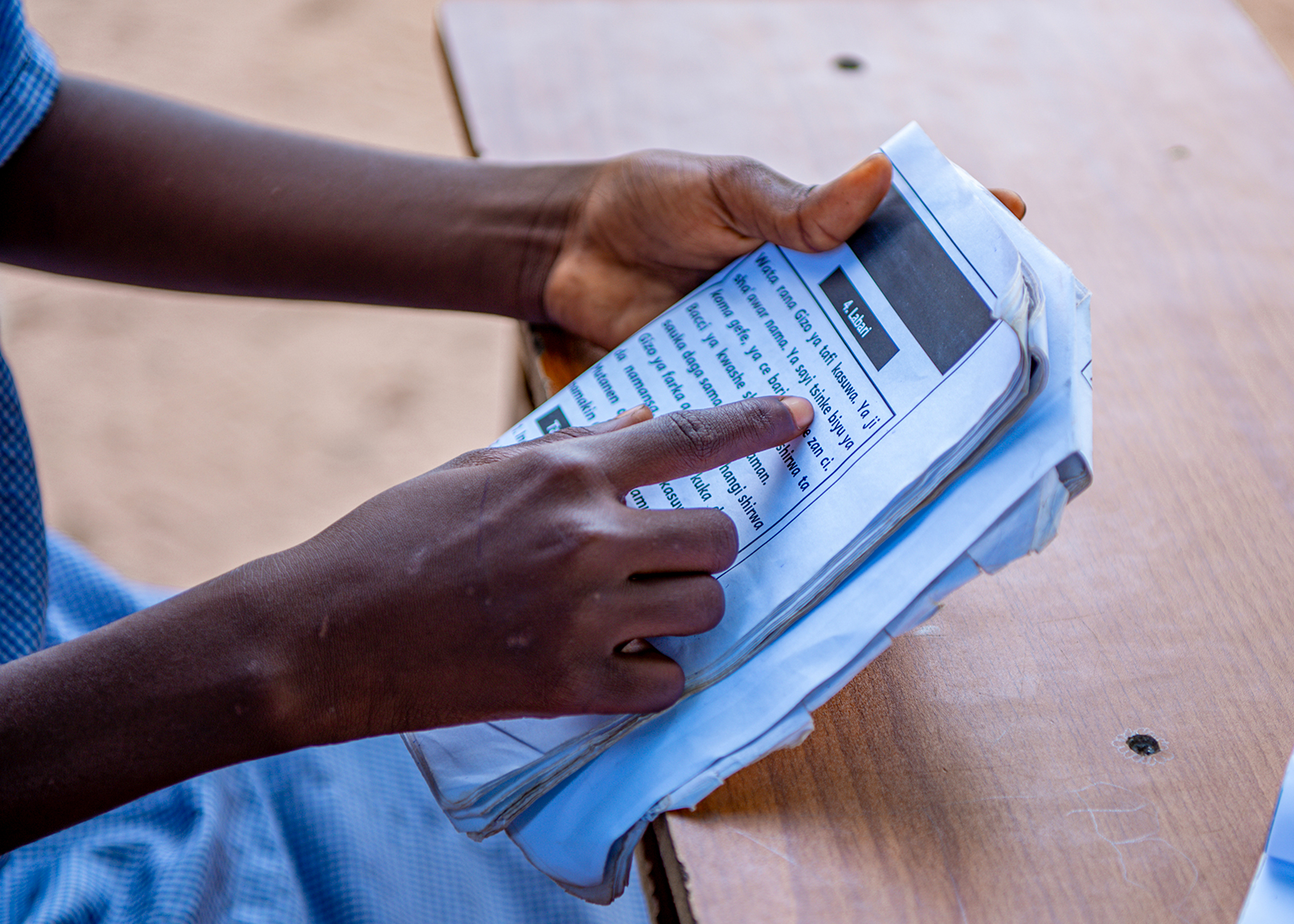
A learner reading a paragraph from a story written in Hausa.
Partnership has also been essential in the Northeast. In Bauchi, Borno, Adamawa, and Yobe, TaRL implementation is supported through UNICEF programming. The state government leads the work, while UNICEF and TaRL Africa provide the technical scaffolding required to support teacher training, instructional coaching, and data systems. Together with state officials, we co-developed scale and institutionalization roadmaps in Borno and Yobe. These roadmaps are practical instruments that help states embed TaRL practices into their supervision structures, teacher support routines, and learning assessment systems.
Government leadership does not only manifest through structural decisions. It appears most vividly in the classrooms where the approach is being implemented. Teachers have reorganized their instruction by grouping learners according to their real skill levels, often in environments marked by high enrollment and limited resources. They have embraced assessment tools that help them understand what children know before beginning instruction, while also adapting their routines to ensure that even the most struggling learners receive the focused attention they need. Such changes occur only when teachers sense institutional backing, clarity of policy direction, and a belief that their practice matters.
The results from the 2023 to 2025 reporting period reflect this shared commitment. Across 1,824 schools and nearly half a million learners, states saw notable improvements in both literacy and numeracy. The proportion of children able to read a simple paragraph in Hausa increased by as much as 35 percentage points in some states. The percentage of children able to read a sentence in English rose by as much as 37 percentage points. Gains in mathematics were also substantial, with improvements of up to 38 percentage points in the proportion of learners who could solve a basic subtraction problem. At the other end of the spectrum, the number of children who could not recognize a single word or identify two-digit numbers declined sharply. These shifts illustrate the power of government-led reform: when state institutions commit to foundational learning and organize their systems around it, even children who have been left behind for years begin to make meaningful progress.
Federal authorities have reinforced this momentum. The Universal Basic Education Commission (UBEC), the Teacher Registration Council of Nigeria (TRCN), and the Federal Ministry of Education have continued to integrate TaRL principles into national teacher training frameworks and policy materials. The Accelerated Basic Education Programme (ABEP), which serves out-of-school children, has also begun incorporating TaRL components through collaboration with the National Education Research Development Commission. These federal-level developments suggest a future in which foundational learning is strengthened through both state-level action and national system alignment.
Meanwhile, innovation continues to emerge from the states themselves. Teachers and state teams are experimenting with approaches that respond directly to the realities of their classrooms. Adaptations for early grades are being tested to ensure continuity between structured pedagogy and TaRL practices. Junior secondary schools are piloting versions of the model to support adolescents who entered higher grades without foundational skills. To optimize the TaRL methodology, TaRL Africa is partnering with various state governments to incubate and test innovative approaches to improving foundational skills. Through support from the Global Partnership for Education Knowledge Innovation Exchange (GPE KIX), we are collaborating with Kaduna and Jigawa States to implement the Teacher Professional Development (TPD) Design-Based Implementation initiative. Under this initiative, we are testing biweekly school-based refresher trainings and school-based teacher leader mentoring as additional layers of support to strengthen teacher capacity.
In Kaduna State, UNICEF is also funding a Junior Secondary School TaRL pilot targeted at learners who transition to higher grades without fully developed foundational skills. Additionally, with support from the School Action Learning Exchange (SALEX) and GPE KIX, we collaborated with Kaduna State to enhance formative assessments in TaRL classes through the Check for Understanding project, aimed at strengthening teachers’ use of assessment data to inform targeted instruction. We are also partnering with the Kebbi State Government, with funding from the Gates Foundation, to test a TaRL model for lower grades that incorporates elements of structured pedagogy into the responsive TaRL methodology.
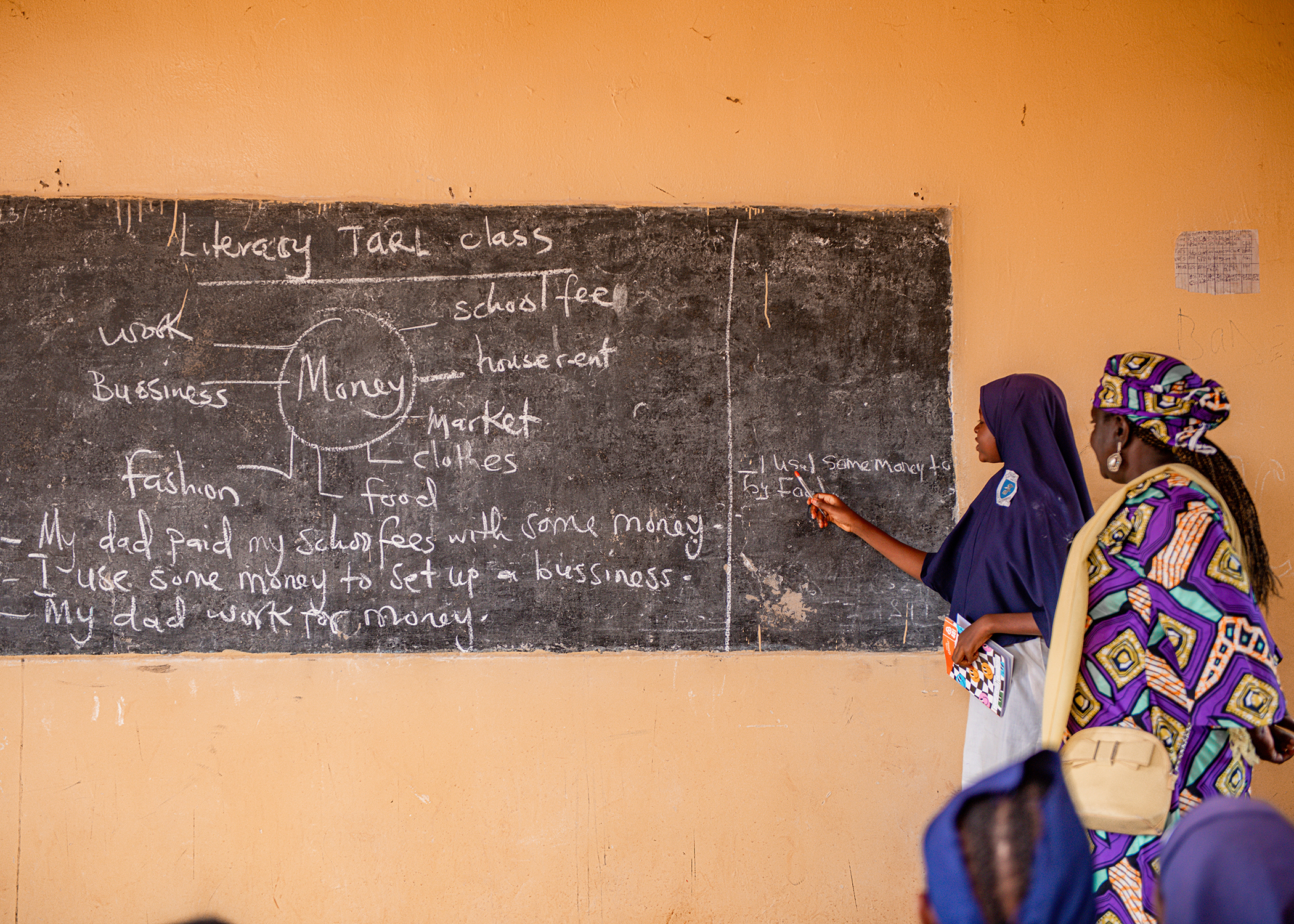
A Junior Secondary School learner in Kaduna forming sentences during the TaRL word map activity.
Lagos has joined this progression with a clear sense of purpose. After undertaking a learning journey to observe implementation in Kaduna, the Lagos State Government allocated funding and began co-designing a contextualized model for its own classrooms. This step signals not only a commitment to strengthening foundational learning in the South but also the adaptability of the TaRL approach: Lagos is shaping the model to reflect its unique classroom realities, linguistic diversity, and instructional context. The state’s measured and deliberate approach illustrates how TaRL can be meaningfully adapted across Nigeria’s varied education systems while remaining firmly rooted in government leadership.
Taken together, these developments present a picture of a maturing ecosystem in Nigeria. State governments are leading implementation, funding expansion, developing long-term strategies, and building the supervisory and data systems required for sustainability. Federal agencies are institutionalizing foundational learning within national structures. Development partners are supporting government priorities rather than directing them. Technical partners such as TaRL Africa are contributing tools, training, and advisory support while remaining firmly in a supporting role.
The evidence from classrooms is therefore not only a reflection of child-level progress. It is a testament to what committed public leadership can achieve. Children who once hesitated to read aloud now do so with confidence. Learners who struggled with basic subtraction are solving problems that were previously out of reach. Teachers speak with greater clarity about learner needs. Supervisors observe instruction with improved understanding of the pedagogical shifts required for progress.
Nigeria’s foundational learning work continues to evolve, but the principle at its center remains constant: government leads, partners support, and children benefit. The progress achieved so far is a reflection of this alignment, and the road ahead offers a pathway to even deeper integration, broader scale, and stronger outcomes for millions of Nigerian learners.