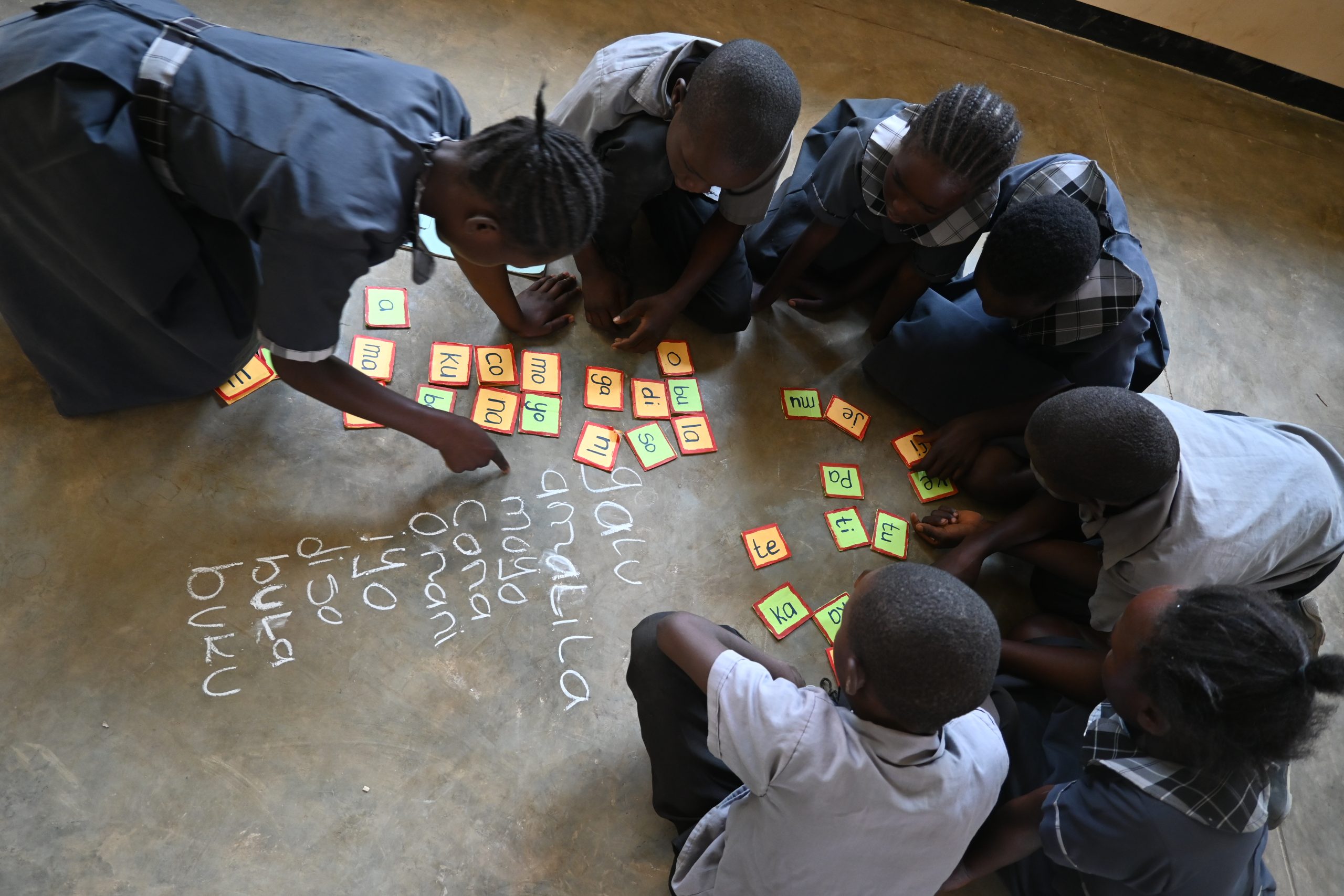
Across Africa, millions of children attend school but struggle to grasp the most fundamental skills–reading and basic math. Without a solid foundation, their entire educational journey becomes a steep, uphill climb. But what if we could change that?
At Teaching at the Right Level (TaRL) Africa, we believe that strong foundational skills are the key to unlocking a child’s full potential. The TaRL Africa Fellowship Program was created to empower dedicated education practitioners with the expertise, mentorship, and hands-on experience they need to drive transformative learning experiences across the continent. This 18-month fellowship is designed for experienced educators eager to deepen their skills in program design, training, and methodology, while working alongside local education systems to improve learning outcomes at scale. Fellows are immersed in diverse education contexts, strengthening their ability to adapt, innovate, and mentor others in the TaRL approach.
Through this program, we’re not just training teachers–we’re cultivating leaders in foundational learning, equipping them to champion education reform that is practical, scalable, and impactful. And when the program ends, the journey doesn’t–fellows become part of the TaRL Fellow Alumni Network where capacity strengthening is offered, continuing to shape the future of education long after their fellowship is complete.
What Does the TaRL Africa Fellowship Include?
The TaRL Africa Fellowship is built on the core principles of the TaRL methodology and our organizational philosophy of “learning by doing.” Rather than passively absorbing knowledge, fellows engage in hands-on, immersive experiences that strengthen their expertise. Over the 18-month fellowship, participants commit 15% of their time (approximately 50 working days) to refine their skills and contribute directly to improving learning outcomes for children across Africa. These activities include:
- Engaging in training workshops to refine their TaRL expertise.
- Co-designing and co-training programs in new, diverse African contexts alongside TaRL Africa and Pratham teams.
- Co-designing teaching and learning materials tailored to new contexts.
- Exploring innovations in the TaRL methodology.
- Strengthening mentorship capacity to support new trainers and teachers.
- Collaborating with other fellows and TaRL Africa team members to discuss and address classroom and training challenges across the continent.
Upon graduation, fellows are featured on the TaRL Africa website and certified as TaRL Trainers. “Once a TaRL fellow, always a TaRL fellow.” Graduating from the program isn’t the end of the journey–it’s just the beginning. Fellows remain active members of the TaRL Fellow Alumni Program, continuing to collaborate, share insights, and contribute to the growth of TaRL across the continent.
Fellowship Modules Include:
- Instructional support for learners, teachers, parents, and communities
- Development and testing of contextually appropriate TaRL materials and methodologies
- Program design and adaptation of the TaRL approach to different contexts
- Capacity building of master trainers and mentors
- Planning and rolling out training sessions
- Monitoring and evaluating classroom processes
- Using data as evidence in TaRL programming
By the End of the Fellowship, Fellows can:
- Effectively train teams in new locations, deeply understanding the TaRL approach and its flexibility to adapt to various contexts
- Support organizations and governments in building effective mentorship systems and skills
- Champion the TaRL approach across diverse settings
- Identify common challenges and provide thought leadership to address them
- Support in-country teams by sharing lessons learned
- Build the capacity of organizations, individuals, and governments to use data to direct efforts and identify challenges
Voices from our Fellows
We’ve received positive feedback from fellows about their experiences in the program:
“The collaboration, support, mutual respect, and passion for assisting the African child have been exceptional.” — Suleiman Mohammed, TaRL Africa Fellow

“It has been a good learning journey. They have helped me grow in my appreciation of the programme. I am able to plan and implement in different contexts. I understand the goals of the TaRL methodology as well as its implementation.” — Adonai Ngosa, TaRL Africa Fellow

 “My mentor was knowledgeable, open-minded, and always happy to share.”Lesedi Ntshambiwa, TaRL Africa Fellow
“I believe I have taken part in the fellowship program to the best of my abilities. The hands-on support from my mentor greatly enhanced my learning experience. I feel confident to carry out activities… with this great experience, I have gained more confidence in demonstrating TaRL activities.” — Elvis Wanume, TaRL Africa Fellow

External partners also valued the support they received from fellows:
- “The fellows’ involvement has significantly contributed to the success of my TaRL pilot program. Even after the training, they have continued to support me by sharing their live experiences of navigating various challenges within their organizations—challenges that I am also facing. They assisted me in designing monitoring tools to track progress effectively. Their support greatly improved the planning and delivery of the training, which was essential for the pilot.” — Martha, Kach-Up Learning Hub, a D-Prize awardee
How the Program Has Helped Fellows:
The TaRL Fellowship experience doesn’t end at graduation. Many fellows continue to play a crucial role in shaping education programs across Africa:
- Rhodah: “I intend to apply the skills gained from the fellowship to strengthen TaRL implementation by supporting teacher training, mentoring, and material adaptation. I will leverage data-driven decision-making to enhance program effectiveness and scale impact, and collaborate with key stakeholders to foster sustainable education interventions.”
- Andrew: “I will build the capacity of my Zambian team on good practices learned from other countries and introduce the L2F2 knowledge gained during the fellowship to my Zambian team.”
- Adonai: “The skills acquired will help me enhance teaching, leadership, and learner performance by guiding and supporting teachers in curriculum implementation and best practices. I aim to establish a peer-learning community where teachers and educators can collaborate and exchange ideas, and use research skills to implement new education policies.”
- Elvis: “I plan to use the skills I gained to enhance TaRL program implementation within my organization by providing technical guidance, supporting partners in designing and implementing TaRL programs, and strengthening team capacity through training and mentorship.”